Choosing the Right Print Size for Your Wall Space
Picking the correct print size is the most overlooked step when turning a favourite photograph into wall art. A print that's too small disappears against a large sofa, while an oversized image overwhelms a narrow hallway. Many people fall in love with a photo online and then guess at dimensions, only to find the finished piece feels awkward on the wall.
A little planning makes the difference between a print that looks like it belongs and one that looks stuck on. Wall space, viewing distance, room purpose, frame style and even the climate of your home all play a role. This guide walks through the practical decisions that help Australian households land on the right size the first time.
Measuring Your Wall Space Accurately
Start with a tape measure and a notepad. Note the width and height of the wall you plan to use, then subtract any fixed features such as light switches, power points, built-in shelving, or skirting boards that interfere with where the print will hang. Australian homes built in the past few decades often have generous open-plan living zones, and the unbroken wall above a long sofa can measure anywhere from 2.4 to 4 metres wide.
Sketch the wall to scale on a piece of graph paper or use a free room-planning app. Mark the location of doors, windows and vents, and shade any areas you want to keep clear. Once you have a quick visual, you can experiment with different print proportions before you commit. Bear in mind that standard Australian interior wall heights are typically 2.4 metres for single-storey homes and 2.7 metres for newer two-storey builds, which directly affects how high a large print can sit.
Viewing Distance and Room Purpose
The distance from which a print will normally be viewed is a strong clue to its ideal size. A fine-art landscape photograph above a dining table, for instance, is usually viewed from about 1.5 to 2 metres away while seated, which suits a print around 60 cm wide. A family portrait in a busy entryway is glanced at from much further away, often from across the room, so it benefits from a larger statement size.
Rooms also have personalities. Living areas in Melbourne and Sydney terrace homes tend to be modest, so oversized prints can dominate. Family rooms in Brisbane or Perth suburban builds usually offer more generous proportions, which means a single large piece or a balanced group can work well. Think about what the room is for: a quiet reading nook rewards something intimate, while a rumpus room or open-plan kitchen welcomes a bolder scale.
Matching Print Scale to Australian Home Layouts
Australian housing stock is unusually diverse, from inner-city apartments in Melbourne's converted warehouses to sprawling Queenslanders on raised stumps and coastal homes in Byron Bay or Adelaide's hillside suburbs. Each style has its own wall rhythm. High-ceilinged Federation homes in Sydney can take tall vertical prints, while modern apartments in Docklands or Surfers Paradise often have horizontal walls above low lounges that favour landscape orientation.
A reliable rule is that a print should cover roughly two-thirds to three-quarters of the furniture beneath it. Above a standard 2-metre sofa, a print between 90 cm and 130 cm wide usually looks balanced. In a long hallway common in Victorian terraces in South Melbourne or Fremantle, a sequence of smaller prints at around 30 cm square, spaced 10 to 15 cm apart, feels gallery-like without crowding the passage.
Standard Sizes and What They Suit
Standard photographic print sizes are useful anchors because they match common frame mouldings and keep costs predictable. Knowing what each size typically works for saves time when ordering.
Common dimensions and where they fit best:
- 8x10 inches (20x25 cm): small shelves, narrow hallways, grouped photo walls in compact apartments
- 11x14 inches (28x36 cm): bedroom walls, bathroom prints, secondary images in a salon-style hang
- 16x20 inches (40x50 cm): above a side table, study nooks, modest lounge walls in apartments
- 24x36 inches (60x90 cm): main living room anchor, large bedroom feature, above a standard sofa
Beyond these, custom sizes open up options. Panoramic landscapes of the Kimberley coast or a wide shot of the Great Ocean Road can be printed at 30x80 inches to suit a long feature wall. A professional lab can produce prints to the centimetre, which makes it easier to fit an unusual alcove or a narrow space between two windows. You can browse the Photo Place website to compare which finishes suit each size and which mounting options are available for very large pieces.
Hanging Height, Frames and Display Rules
Hanging height is the secret to making a print feel intentional. The conventional guideline is that the centre of the artwork should sit at roughly 145 to 150 cm from the floor, which is close to average Australian eye level. A 90 cm tall print, for example, would have its top edge around 35 cm above the centre mark, so the top of the frame sits about 180 cm up.
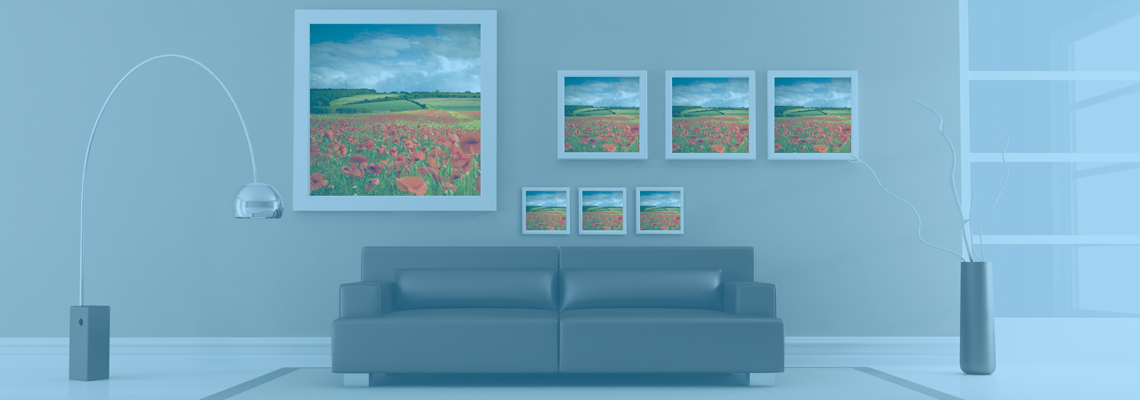
Grouping is also worth considering. A symmetrical grid of four prints creates a calm, formal feel that suits a Hamptons-style dining room, while an organic cluster of mixed sizes feels relaxed and works well in a beach house in Noosa or a coastal cottage in Albany. Allow 5 to 10 cm between frames so each piece breathes. If you are renting, remember that most Australian tenancy agreements ask tenants to avoid making unnecessary damage to walls; removable picture-hanging strips from local hardware stores such as Bunnings or Mitre 10 are usually accepted by landlords and leave plaster intact.
A quick reference for typical rooms:
- Living room sofa: centre of print 130–160 cm from the floor
- Dining room: 145–155 cm from the floor, visible while seated
- Bedroom above the headboard: 120–140 cm from the floor
- Hallway or staircase: adjust so prints follow the line of sight
Climate, Sun and Long-Term Preservation
Australia's harsh light is one of the biggest threats to printed photographs. UV exposure fades colour papers and dyes relatively quickly, which is why prints hung on a wall that catches direct afternoon sun through west-facing windows, common in Perth and Adelaide suburbs, can look noticeably washed after a few years.
To extend the life of a print, choose acid-free archival papers, request UV-filtering glass or acrylic in the frame, and rotate artwork between rooms every six to twelve months. For unframed canvas or acrylic prints, a light-fast pigment-based ink set is worth asking about. A humid climate in places like tropical Cairns or Hobart's cooler winters also affects paper, so keep framed prints away from bathrooms and kitchens where steam is common. Properly prepared, a fine print will hold its colour and contrast for decades.
Working With a Professional Lab for the Right Result
A reliable photo lab helps you translate these decisions into a finished piece. Local finishing labs can advise on paper stocks, mounting options and whether your image has enough resolution for the print size you want. Many Australian photographers now mail work in for processing, and the workflow is straightforward for customers anywhere from Darwin to Launceston. The what to expect when you mail in your film for processing guide covers turnaround times, packaging and what to include with your order, which is useful if you are sending negatives or transparencies for both prints and digital scans.
If you are starting from a digital file, ordering a small proof print before committing to a large size is a smart move. The cost difference is small and it removes the guesswork. Ask the lab to check resolution at your intended size, and request a soft-proof preview if colour accuracy matters. A proof sheet or contact print of the whole roll also helps when picking the strongest frame from a sequence, which is especially handy for landscape shooters working along the Murray River or on the Mornington Peninsula.
A 90 cm wide print hung at 150 cm to its centre, on an unbroken wall at least 1.8 metres wide, will almost always feel right in a standard Australian living room.