How to Preserve and Store Your Printed Photographs for Decades
Printed photographs carry details that digital files often cannot replace: the texture of paper, handwritten notes on the back, and the physical connection to a person or place. With thoughtful handling and suitable storage, family snapshots, wedding portraits, school pictures, and professional prints can remain in excellent condition for generations.
Long-term photo preservation depends on several factors, including paper quality, ink stability, humidity, light exposure, and the materials used for albums or boxes. A few practical habits can prevent fading, discoloration, curling, fingerprints, and accidental damage before these problems become permanent.
The Photo Place has served the Youngstown, Ohio area since 1983, helping families and photographers create, reproduce, and protect meaningful images. Whether you are organizing a small collection or caring for archival prints, the right combination of professional output and safe storage makes a lasting difference.
Start with clean, careful handling
Before storing photographs, wash and thoroughly dry your hands. Oils, lotions, food residue, and moisture can transfer to the surface and leave marks that become difficult to remove. Hold prints by the edges rather than touching the image area, especially when working with glossy paper, older photographs, or darkroom prints.
Keep drinks, food, pens, adhesives, and open windows away from your work area. A clean, dry table offers a safer surface for sorting. If you need to examine a large group, handle only a few images at a time and avoid sliding one print across another. Scratches and abrasions can occur even when the photographs appear sturdy.
Use a soft, clean brush or air blower to remove loose dust. Do not use household cleaners, paper towels, adhesive tape, or liquid solutions on the image surface. Cleaning chemicals can damage emulsions, alter colors, and leave residue that accelerates deterioration.
Choose an environment that stays stable
Photographs last longest in a cool, dry, stable environment. Rapid changes in temperature and humidity cause paper to expand and contract, which can lead to curling, brittleness, mold, or image-layer separation. A living room closet or interior cabinet is usually safer than an attic, basement, garage, or shed.
Avoid areas near radiators, fireplaces, air vents, plumbing, exterior walls, and windows. Basements may experience dampness, while attics can reach extreme temperatures. Even a waterproof storage container cannot fully protect prints from a consistently poor environment if condensation forms inside it.
Aim for moderate humidity and steady temperatures rather than trying to create a perfectly controlled archive. A simple digital hygrometer can help monitor storage conditions. If the space regularly feels damp or musty, move the collection before mold or mildew appears. For valuable historical photographs, consult a conservator about more precise climate control.
Use archival materials for lasting protection
Acid-free, lignin-free folders and boxes are preferable to ordinary cardboard, newspaper, envelopes, or plastic sleeves of unknown quality. Storage materials labeled archival, photo-safe, or PAT-tested are designed to reduce chemical reactions that can yellow paper or damage photographic surfaces. Avoid PVC plastics, which may release harmful compounds over time.
Choose sleeves that fit the photographs without forcing them into place. Polyester, polypropylene, and polyethylene are generally safer options when they are clearly identified as photo-safe. Paper enclosures can work well for prints that need protection from light, while sleeves offer convenient viewing. Do not overfill boxes or albums, since pressure can bend corners and create surface abrasions.
Use albums with sturdy pages and photo corners or archival mounting systems instead of self-adhesive “magnetic” pages. The adhesive in older albums can stain prints and make removal risky. If you want to include dates, names, or locations, write on the back with a photo-safe pencil or archival pen, applying only light pressure.
| Storage choice |
Benefits |
Potential concerns |
| Archival paper envelopes |
Breathable, inexpensive, and suitable for labeled organization |
Prints are less visible without removal |
| Photo-safe plastic sleeves |
Easy viewing and strong protection from handling |
Poor-quality plastics may trap moisture or release chemicals |
| Archival albums |
Keeps related photographs together and allows captions |
Adhesive pages and overcrowding can cause permanent damage |
| Acid-free boxes |
Useful for large collections and long-term storage |
Boxes should not be kept in damp or hot locations |
| Display frames |
Makes memories accessible and decorative |
Light, heat, and unsuitable backing can accelerate fading |
Control light and display conditions
Light is one of the most common causes of fading. Ultraviolet radiation can break down dyes and pigments, while prolonged exposure to bright indoor light gradually reduces contrast. Even high-quality photographic prints should not remain in direct sunlight for years.
Display important images away from windows, skylights, and strong lamps. Use UV-filtering glazing when framing treasured or irreplaceable work. A mat can keep the print from touching the glass, allowing air circulation and reducing the risk of condensation. Acid-free backing and professional framing materials provide additional protection.
Rotate displayed photographs periodically so the same image is not exposed indefinitely. Keep a duplicate or high-resolution digital scan in storage, particularly for family portraits, historical documents, and one-of-a-kind prints. A display copy can preserve the original while still allowing the image to be enjoyed daily.
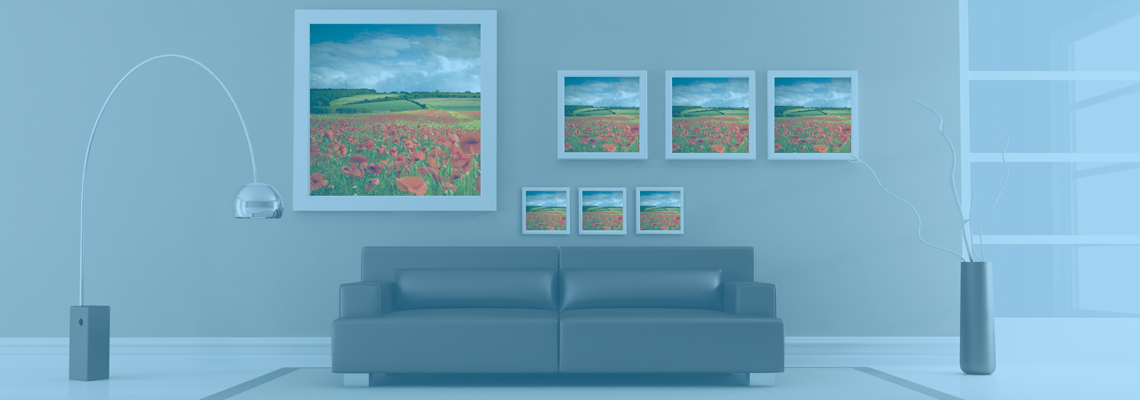
For decorative upgrades, consider producing a separate wall piece from a scanned image. Guidance on canvas and metal prints can help you choose a surface suited to the room, lighting, and style without putting an irreplaceable original at risk.
Organize prints and create backup copies
A preservation system should make photographs easy to identify without requiring constant handling. Sort images by family, event, year, or photographer, then place them in labeled folders or boxes. Keep labels simple and avoid attaching stickers directly to the print. An inventory sheet can record names, dates, locations, and any known history.
Scan especially important photographs at a high resolution and save the files in more than one location. Keep one copy on a local drive and another on a separate drive or reputable cloud service. Use descriptive filenames, such as “1958-Smith-family-reunion,” rather than relying on camera-generated numbers. Review backup files periodically to ensure they still open correctly.
Digital copies do not replace physical preservation, but they provide an essential safeguard against fire, flooding, loss, and handling damage. The same approach applies to slides, negatives, and home movies. If aging videotapes contain family history, video transfer services can help move those recordings into a more accessible format before the original media deteriorates.
Make professional finishing part of the plan
Professional printing and finishing can improve both the appearance and the longevity of photographs. A lab can recommend paper types, protective finishes, mounting methods, and framing options based on whether an image will be handled, stored, displayed, or given as a gift. This is particularly helpful for enlargements, wedding albums, proof sheets, and professional portfolios.
When reproducing an older photograph, request a careful scan and color correction rather than repeatedly handling the original. The resulting print can be used for relatives, albums, or wall decor while the source image remains safely stored. Large-format printing also allows a small, high-quality original to become a display piece without enlarging the fragile original itself.
The Photo Place supports families, artists, and professional photographers with film developing, digital printing, large-format output, passport photos, photo gifts, albums, framed prints, and other finishing services. Customers can order online or visit the retail location for help selecting an appropriate product. Mail-in film processing also makes it practical to preserve photographs from collections located outside the Youngstown area.
Build a routine for photo care
A collection is easier to protect when preservation becomes a regular habit instead of an emergency project. Set aside time once or twice a year to inspect boxes, check for moisture or pests, confirm that backups are working, and identify prints that need better enclosures. Keep storage shelves several inches above the floor where possible, reducing risk from minor leaks.
Use these habits as a practical preservation checklist:
- Store prints in a cool, dry, stable interior space away from sunlight and plumbing.
- Select acid-free, lignin-free, photo-safe materials and avoid PVC plastics.
- Handle images by the edges with clean, dry hands.
- Scan irreplaceable photographs and maintain at least two backup copies.
- Display copies or reproductions when the original is fragile, rare, or especially meaningful.
If you find mold, severe sticking, flaking emulsion, water damage, or photographs fused together, stop separating or cleaning them yourself. Place the affected materials in a safe, dry area and seek advice from a professional conservator or experienced photo lab. Aggressive cleaning can cause more damage than the original problem.
Preserving printed photographs is a practical way to protect family history, creative work, and the everyday moments that deserve to be remembered. Begin with the images that matter most, give them stable storage, create reliable copies, and use professional printing or finishing when a safer duplicate or display piece is needed. The Photo Place is ready to help turn cherished photographs into durable prints, albums, framed artwork, and gifts that can be enjoyed for decades.