The Best Print Sizes for Small Apartments and Dorm Rooms
Small spaces can still hold meaningful images, personal milestones, and creative work. The key is choosing print dimensions that suit the wall, furniture, lighting, and viewing distance instead of treating every blank area as a place for the largest possible enlargement.
In a dorm room, a few well-sized photographs can make a temporary space feel personal without competing with a desk, bed, or storage unit. In a small apartment, coordinated prints can add warmth and character while keeping narrow walls and compact rooms visually open.
The Photo Place has served the Youngstown, Ohio area since 1983 with photo printing, film developing, large-format output, passport photos, wall décor, photo gifts, and professional finishing. Whether you order online or visit the retail location, thoughtful sizing helps every image look its best.
Start with the wall and viewing distance
The wall itself should determine the print size. Measure the available width and height, then account for furniture, light switches, door swings, and existing décor. A print that technically fits may still feel crowded if its edges sit too close to a bookshelf or headboard.
Viewing distance matters as well. A photograph seen from across a room can handle a larger format, while an image displayed beside a desk or on a narrow shelf is usually better at a smaller size. For most dorm rooms and studio apartments, prints between 5 x 7 and 11 x 14 inches are flexible choices because they provide visual impact without overwhelming the space.
Leave some breathing room around each image. A border or mat can make a small print feel more substantial, while a tight, edge-to-edge frame often makes a compact wall appear busier. When in doubt, use paper cutouts to test placement before ordering.
Small prints for shelves, desks, and clusters
The 4 x 6 inch format works well for casual snapshots, travel memories, and rotating displays. These prints fit standard frames, photo holders, and small clipboards, making them easy to rearrange as your room changes. A group of three or four 4 x 6 prints can create a relaxed arrangement without requiring a large uninterrupted wall.
The 5 x 7 inch size offers a little more presence while remaining easy to frame. It is especially useful for portraits, pet photographs, and vertical images with clear subjects. On a dorm desk, a 5 x 7 print can stand behind books or sit beside a lamp without taking over the workspace.
For a more polished arrangement, use several small prints with consistent borders or matching frames. Keeping the outer edges aligned creates order, even when the photographs show different places or people. This approach is also practical for renters because it can be installed with lightweight hooks or removable hanging strips.
Medium formats for personal focal points
An 8 x 10 inch print is one of the most adaptable choices for a small apartment or dorm room. It is large enough to serve as a focal point above a nightstand, dresser, or compact sofa, yet small enough to work in a gallery wall. Portraits and tightly composed landscapes often look particularly strong at this size.
The 8 x 12 inch format preserves a wider image shape and suits many digital photographs better than a cropped 8 x 10. It can be positioned vertically or horizontally, which makes it helpful for narrow wall sections above a desk or along a hallway. If the original image has a wide composition, keeping more of the scene can produce a more natural result.
An 11 x 14 inch print is a good choice when one photograph needs to anchor a wall. It works well for a favorite portrait, an architectural image, or a bold piece of personal artwork. In a small room, one 11 x 14 print often has more impact than several unrelated medium-sized pieces, especially when paired with a simple frame.
| Print size |
Best location |
Suitable subjects |
Display approach |
| 4 x 6 in |
Desk, shelf, bedside table |
Snapshots, candid moments |
Easel, clip, or small frame |
| 5 x 7 in |
Desk, dresser, narrow wall |
Portraits, pets, travel photos |
Single frame or small grouping |
| 8 x 10 in |
Above a nightstand or desk |
Portraits, detail-rich images |
Framed focal point or gallery wall |
| 8 x 12 in |
Hallway, vertical wall section |
Landscapes, architecture, wide scenes |
Horizontal or vertical frame |
| 11 x 14 in |
Above a sofa, bed, or dresser |
Favorite image, artwork, statement portrait |
Single large frame with mat |
| 12 x 18 in |
Open wall with longer viewing distance |
Landscapes, posters, graphic images |
Lightweight poster or framed print |
Choosing larger prints without crowding the room
A 12 x 18 inch print can work beautifully in a studio apartment when it is given enough visual space. It is most effective above a small sofa, bed, or dining nook, where the viewer can see it from several feet away. Larger formats should generally have a clear purpose rather than being added simply to fill an empty wall.
Wide images benefit from panoramic proportions, while portrait-oriented photographs can emphasize height in rooms with low or narrow walls. Before printing, check the crop carefully. Enlarging an image without considering its aspect ratio may remove important details or force an awkward composition.
Large-format printing is also useful for lightweight wall décor that does not require a heavy frame. A poster-style finish can keep the display affordable and easy to move between apartments. For a more permanent look, a framed print, canvas, or mounted panel adds structure and protects the image from handling.
Match print sizes to the room’s function
Bedrooms and dorm sleeping areas usually benefit from calming images in medium sizes. An 8 x 10 or 8 x 12 print above a nightstand creates a personal touch without becoming too dominant near the bed. A pair of matching 5 x 7 prints can also add balance to either side of a mirror or shelving unit.
Work areas need visual restraint. A small group of 4 x 6 or 5 x 7 prints can personalize a desk while preserving room for school materials, a monitor, and task lighting. If you are displaying certificates, design sketches, or professional photographs, consistent 8 x 10 frames can give the workspace a cleaner appearance.
Living areas can handle a more deliberate statement. An 11 x 14 print above a compact sofa or a 12 x 18 landscape at the end of a hallway gives the eye a destination. For themed décor, even an unusual subject can become effective when the color palette and frame style support the room; a playful gaming-inspired collection could take cues from fruit machines and Litecoin while using small coordinated prints rather than one oversized image.
Prepare files for clean, attractive prints
Resolution becomes increasingly important as print size grows. A small phone image may look sharp at 4 x 6 but reveal softness when enlarged to 12 x 18. Review the file at full size before ordering, and avoid repeatedly saving compressed versions that can introduce artifacts.
Color and brightness should be checked against the intended display location. A photograph that looks vivid on a bright phone screen may print darker, especially when it will hang in a room with limited natural light. Professional photo finishing can help preserve detail, skin tones, and color balance across different print sizes.
Film photographs deserve the same care. If you have negatives or disposable-camera images from family events, travel, or school memories, the right scan and print workflow can turn them into meaningful wall décor. The Photo Place explains the process in its film developing guide, including options for customers who mail in film for processing.
Build a cohesive display on a compact budget
A coordinated display does not require every print to be identical. Choose one common element, such as black frames, warm wood, white borders, or a shared color palette. This keeps a collection connected even when the images come from different years and sources.
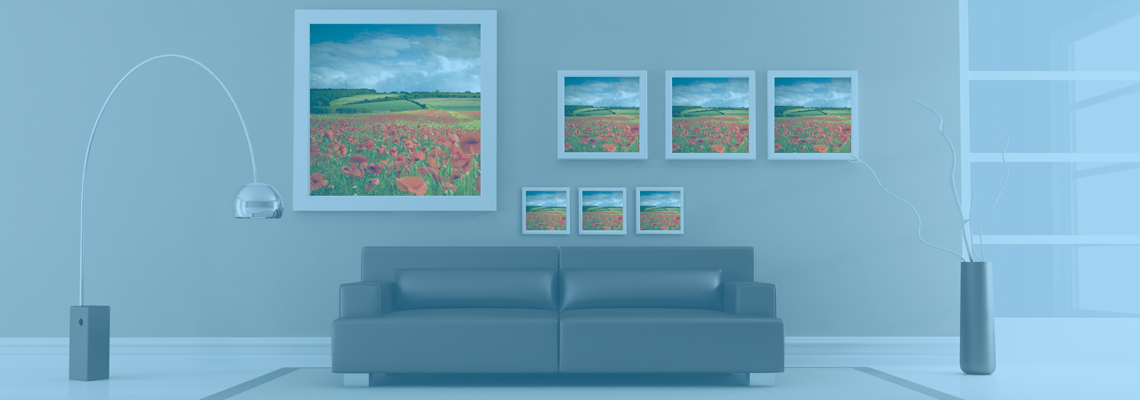
Use the largest print as the visual anchor, then arrange smaller formats around it. For example, an 11 x 14 portrait can sit in the center with two 5 x 7 prints nearby, while a row of 4 x 6 photographs can fill a narrow ledge below. Keep spacing consistent and place the center of the arrangement at a comfortable eye level.
- Measure the wall and nearby furniture before choosing a format.
- Select 4 x 6 or 5 x 7 prints for flexible, easy-to-change displays.
- Use 8 x 10 or 8 x 12 prints for personal focal points.
- Reserve 11 x 14 and 12 x 18 sizes for open walls with enough viewing distance.
- Review crop, resolution, and brightness before placing an order.
The best print size is the one that gives an image room to be seen while respecting the proportions of the space. The Photo Place can help turn phone photographs, film negatives, creative projects, and family memories into prints, framed pieces, albums, or personalized décor suited to your room. Order online or visit the Youngstown location to choose a finish that makes your compact space feel distinctly yours.