Why Multiple Small Prints Make Better Photo Collages
A collage made from several small photographs can tell a richer story than one oversized image. Each print becomes part of a visual sequence, allowing a birthday, holiday, family gathering or wedding day to unfold across a wall, shelf or noticeboard. The result feels personal because the viewer can discover details gradually.
Small-format printing also makes it easier to include different types of photographs. A close-up of a bouquet can sit beside a wide landscape, a candid laugh, a handwritten note or an old film snapshot. The varied scale and subject matter create movement without requiring a complicated design.
For Australian homes, this approach suits many real spaces. A rented flat in Sydney may have limited wall area, while a family home in Adelaide might offer a hallway or stairwell for a larger arrangement. Smaller prints are flexible enough to work around existing furniture, narrow walls and changing décor.
The Photo Place supports this kind of project with digital printing, film developing, enlargements and finishing services. Customers can order online or visit the Youngstown, Ohio retail location for help, while mail-in processing makes the lab useful to photographers and families arranging prints from further away.
Create More Story From the Same Collection
Ordering several small prints gives you room to show different moments rather than selecting just one photograph. A travel collage might include the main landmark, a café table, a street sign, a beach detail and a portrait of the people who made the trip memorable. Together, the images communicate atmosphere as well as information.
This format is especially effective for milestone events. A wedding arrangement can combine preparations, ceremony details, family groups and informal reception photographs. If you are choosing a larger keepsake alongside the wall display, these ideas for a story-led wedding album can help separate the most important images from supporting snapshots.
Small prints also reduce the pressure of editing. You do not need to decide which single image deserves the entire frame. Printing a carefully selected group lets several people, places or emotions share attention while keeping each photograph affordable and easy to replace.
Build Balance Into the Layout
A strong collage usually needs a visual anchor. Choose one or two photographs with clear focus, such as a family portrait or a sweeping landscape, then arrange quieter images around them. Repeated colours, similar lighting or a common subject can make the collection feel connected.
Borders are useful when photographs have very different compositions. A consistent white margin gives the eye space to move between images, while a black or coloured border can create a more formal appearance. Square prints, mini retro prints and standard rectangular formats can all work, provided the spacing is deliberate.
Before ordering, place digital files into a temporary grid or print rough copies at home. Test whether the arrangement feels too crowded from the distance at which it will usually be viewed. For framed displays, leave enough room between each item for the wall colour to act as part of the design.
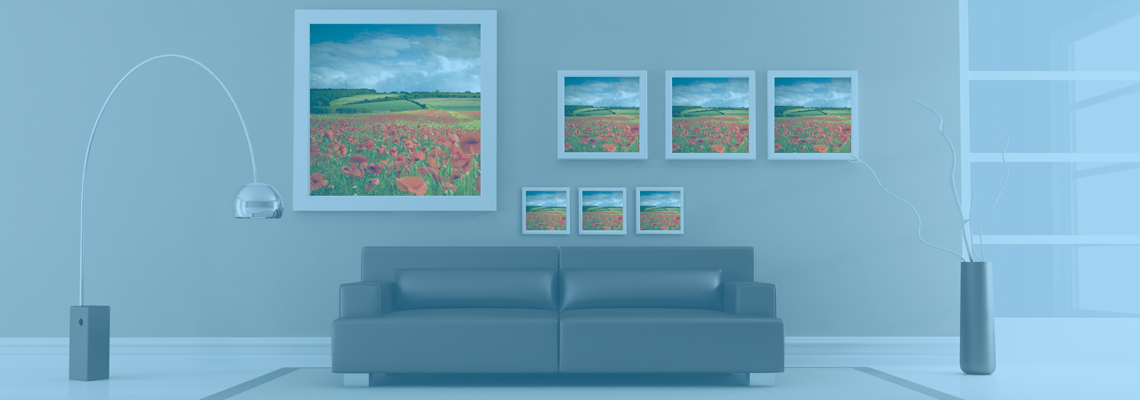
A gallery wall does not have to be perfectly symmetrical. A relaxed arrangement often suits family photography, travel memories and film prints. For practical guidance on spacing, frames and placement, this guide to gallery wall ideas is a useful reference.
Plan the Prints Before Placing an Order
A short preparation process prevents common problems such as duplicated images, awkward crops or photographs that look too dark after printing. Check each file at full size, remove near-identical versions and decide whether the collage will be portrait, landscape or mixed-format.
Keep the intended viewing distance in mind. Prints around 10 x 15 cm suit desks, shelves and compact wall groups, while 13 x 18 cm or square formats can provide more presence without dominating a room. Australian homes often use centimetres when planning décor, so measuring the available area before selecting a size makes the final arrangement easier to judge.
Useful choices to make early:
- Select one main colour mood, such as warm, neutral or monochrome
- Decide whether white borders will be part of the design
- Choose frames, clips, adhesive strips or a photo ledge
- Leave space for future prints if the story may grow
The order itself should reflect the final display. If the prints will be mounted in a grid, consistent dimensions simplify the process. If the arrangement will be organic, mixing two or three sizes can add energy while maintaining enough repetition to avoid visual clutter.
Details worth checking before approval:
- Cropping around faces, hands and important objects
- Image orientation and the number of portrait versus landscape prints
- Colour correction for older scans or underexposed photographs
- Delivery timing, especially for interstate or regional addresses
Choose Finishes That Suit Australian Living
Print surface affects both appearance and everyday maintenance. Gloss paper gives colours strong contrast, but it can reflect windows and overhead lighting. Lustre or satin finishes tend to be easier to view in bright rooms and are less likely to show fingerprints, which is useful for prints handled by children.
Sunlight is another practical consideration. A collage placed near a north-facing window in Melbourne or a bright living room in Brisbane may fade faster than one displayed in a shaded hallway. Using frames with glazing that filters ultraviolet light, positioning prints away from direct sun and choosing quality photographic paper can help preserve colour.
Humidity and dust also matter in coastal areas such as Newcastle, Gold Coast or Perth. Avoid placing unprotected prints directly beside steamy bathrooms or kitchen sinks. A frame, photo ledge or archival sleeve adds a barrier without taking away from the visual effect.
For older family collections, scanning and printing provide a safer way to display memories. Instead of exposing original photographs to handling, you can create copies for the wall and store the originals. If boxes of prints, negatives or slides are waiting to be organised, shoebox scanning can turn a loose archive into files ready for a new collage.
Make the Collage Personal and Practical
The best arrangements often mix polished photographs with small pieces of context. Add a ticket stub, a child’s drawing, a short caption or a date card between prints, provided the materials are protected and the layout remains readable. A few non-photographic details can make the display feel like a memory board rather than a standard set of framed images.
Consider the people who will live with the collage. In a busy household, removable mounting strips can allow the display to change without leaving large holes. In a rental property, a photo ledge or freestanding frame may be more suitable than permanent fixings. Check the product instructions and the wall surface before mounting anything.
Copyright and privacy deserve attention when photographs include other people. In Australia, the Copyright Act generally gives rights to the photographer, so obtaining permission is sensible before reproducing professional images or photographs taken by someone else. The Privacy Act and related workplace or school policies may also affect how identifiable images are shared, particularly when children, clients or public events are involved.
A collage can also become a thoughtful gift. Small prints are easy to post, and recipients can arrange them in their own way rather than receiving a fixed wall design. For families spread between Canberra, Darwin and regional towns, a coordinated set of photographs can create a shared visual record even when everyone cannot gather regularly.
Preserve the Collection as It Changes
One advantage of a small-print collage is that it can develop over time. Add a new photograph after each holiday, school year or family celebration, keeping a consistent border or colour treatment so the display remains coherent. This approach avoids the expense and commitment of replacing an entire large artwork.
Keep a simple record of file names, dates and people shown in each image. Digital folders organised by year or event make reordering easier and protect against losing the story behind an old photograph. Back up important files in more than one location before sending them for printing.
Film users can bring analogue character into a modern arrangement. Grain, softened colour and unexpected framing often give a collage warmth that highly polished digital images do not. Developing a roll and selecting a few frames for small prints can also encourage more thoughtful editing than printing every image from a phone.
A well-designed collage does not depend on expensive frames or a large wall. It depends on choosing photographs that belong together, giving each one enough breathing room and selecting materials suited to the room. Multiple small prints let a collection retain its variety, flexibility and human detail. The lasting idea is simple: a meaningful story is often strongest when it is made from many small moments.